finding work that aligns with your interests
putting in the work to find work
Finding work is hard. Finding meaningful work is even harder. It requires doing things that don’t scale and visibly sacrificing time to pour energy, effort & attention into selling someone you want to work with. Tim Urban might argue that it’s worth your time:
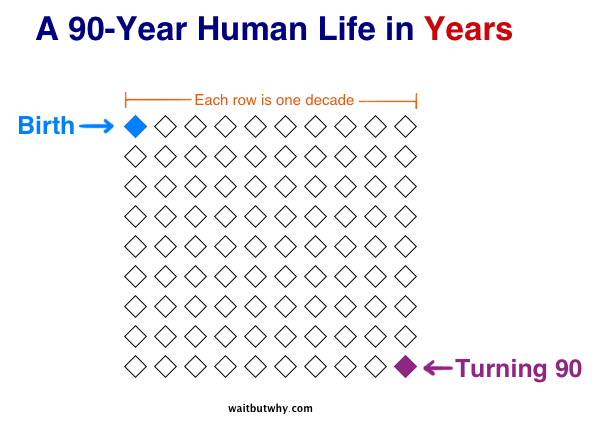
I see a lot of folks throwing resumes on piles, or hiring perplexity to blast emails to hiring managers, and I just think there’s a better way, both for us and the companies we’d like to hire us.
People at companies want the people who most want to work there and who will do the best job. You can show you’re one of those people, and it behooves you to try for hard things you’re curious about!
Below, I’ve introduced an alignment 2x2:
The bottom left is the obvious: not spending the time figuring out what genuinely interests you, and not putting in the work to chase after it when you find something interesting. The bottom right is a bit better: you’re working hard and you may find some traction, but you may not be thinking smart about what’s best for you.
In the top left, you might be aligned, but if all you do is drop your resume in the bucket you’re at real risk of never hearing back from a great opportunity. If you’re genuinely interested in some kind of work, you likely wouldn’t just drop a resume in linkedin and wait, you’d run to the top right where high effort and alignment meet.
The bad news is there’s no linear path to this quadrant: no X amount of effort = Y amount of outcome. The good news is that doing these things expands your surface area for getting the thing you want, and that it’s about effort, meaning anybody, regardless of where they went to school, what they studied or where they work can put in.
figuring out what I wanted to work on
When I graduated college, I’d heard about startups but had never seen one up close, so I spent days looking at thousands of portfolio companies from VCs I thought were doing interesting work, in hopes that I’d find a few at the intersection of a problem I was interested in and people I admired.
I ended up finding out about Blackbird, an early stage restaurant tech startup. I admired the work they were doing and found out I had a connection there who was extremely kind and willing to refer me. They actually didn’t have a job opening at the time, but I’d decided I wanted to work there anyways and was going to put my eggs in that basket.
With no real experience, I figured a pretty resume and cover letter wouldn’t be enough, so friends and I got to the drawing board. Since Blackbird’s product existed in hundreds of restaurants in the city, I thought it’d be interesting and useful to walk around to 20-30 of them, compile product feedback from employees and email the head of sales with my findings. I ended up emailing him 20% of the feedback and telling him I’d share the other 80% if he met with me. This got me in the room with him, and throughout the process I continued to send restaurant feedback I gathered in an attempt to go above and beyond what was asked.
A few months & interviews later, I was hired. I walked into a meeting on my first day introduced as something to the effect of “if Jed wasn’t here right now I have no doubt he’d still be knocking.” I don’t say this to brag but rather to say that continuing to demonstrate interest makes it abundantly clear and proves you’re driven by opportunity.
enter: mini projects
A good test for someone being genuinely interested in work is if going above and beyond what is asked feels easy. This often happens to be a great trial for how you’ll feel about the work if you get the job, too. People who do 100x more on something don’t necessarily feel like they’re doing 100x more, it probably just feels 100x easier for them than it does for somebody else. You will show up your best for the companies you're the best fit for!
If I were looking for a specific company right now, I might think about getting ahold of the right folks by working on mini projects for them. There’s no one-size-fits-all thing you can do to necessarily earn a job, but that’s the cool part. It’s up to us to create uniquely shaped objects for uniquely shaped companies and make it easy for them to say yes.
Because of this, it’s challenging to prescribe projects without an understanding of the company and the folks that work there. I threw some out anyways so you get the idea:
For sales, spend enough time with the product to be able to sell it, then go out and literally pitch people. Email your feedback to the team.
For engineers, build something (think dashboards, websites, physical gadgets) and send it to the team. Both software and hardware have never been easier to build.
For marketing, use what you have in your room to build a low-budget campaign. Post it online, or do something physical and mail or deliver it to them.
These projects should make obvious that you’d like to work with the team, but you still need to be earnest and explicit about what you want.
Aside from these, the biggest way to expand this luck surface area is to post in public, allowing others inside your brain to learn what you’re great at. Henrik Karlsson has a wonderful essay on this, that public posting leads future friends, partners and coworkers to your inbox (and I know many examples of folks who’ve found the majority of their work from posting in public!)
rapid fire advice
This goes without saying but the warmer the connection, the better. Use referrals and references to your advantage, especially when they’re strong
Handwritten thank you notes. Handwrite thank you notes sharing a combination of things you’ve learned and things you’re excited about. Find a way to get them to the team
Reliability, in general, and specifically in following through on promises made on networking calls. The amount times I’ve spoken with people in my circles about my company or career advice in general where I agreed to pass their resume, website or twitter and a good word along and they didn’t is way higher than it should be!
what it all means
You have to put care into this process, like you have to put care into any ask of somebody’s most valuable resource, time, like you would when your social reputation is on the line, as with hosting a party, or trying to court a potential partner on a first date.
It’s funny that we put so much thought and care when it feels our reputation is on the line, but often when it comes to jobs we are told to simply paste our pre-filled qualifications in the form of a resume, and massage that story a little bit in the form of a cover letter. If you’re somebody who gets energy from people, and sparks joy in others’ lives, you should feel severely disadvantaged by companies relegating you to pieces of paper for the sake of an easier candidate process.
People are human and they want to connect as humans. As we increase our reliance on robots, don’t be robotic. Put in the kind of genuine effort that shows that you give a damn, and you need to take part. If the role doesn’t exist, create it yourself!
Remember that rules are suggestions, and that making a role where there isn’t one because you have genuine interest in working with folks you admire on a problem you’re excited about is worth the effort.